
Sharpshooter King treats aim as a measured skill rather than a loud arcade rush. Its timing plus target patterns require a calm scoring rhythm from the first shot. This article is written for focused arcade players at JLFF to help them understand its shooting structure, with the goal of shaping steadier play before entry.
Overview of Sharpshooter King
The game centers on accuracy under a firm round structure, so every shot carries visible weight. A player studies the field then controls the pointer before release. This simple loop creates clear tension without needing complex menus or heavy story layers around each stage.
Scoring in Sharpshooter King rewards clean placement more than restless clicking during the round. A measured shot can protect the score when the target window feels narrow. The visual design stays direct, so pressure comes from timing rather than clutter across the screen.
Timing mechanics in Sharpshooter King
Round timing shapes the whole shooting rhythm on JLFF, since hesitation can affect score control across every stage of focused play. The clock in Sharpshooter King turns each decision into a small tradeoff between patience plus speed. A player gains better results by reading the timer early instead of rushing near the final seconds.
- Opening seconds: The first moments are useful for reading target behavior before committing to shots that may weaken the round.
- Mid round pressure: The middle phase often decides whether aim stays controlled or turns into hurried reactions with lower accuracy.
- Final countdown: The last seconds reward prepared movement because late correction leaves very little room for stable release.
- Reset flow: Each new round clears the pace, so the next target pattern should be judged without carrying past mistakes.
Target types in Sharpshooter King
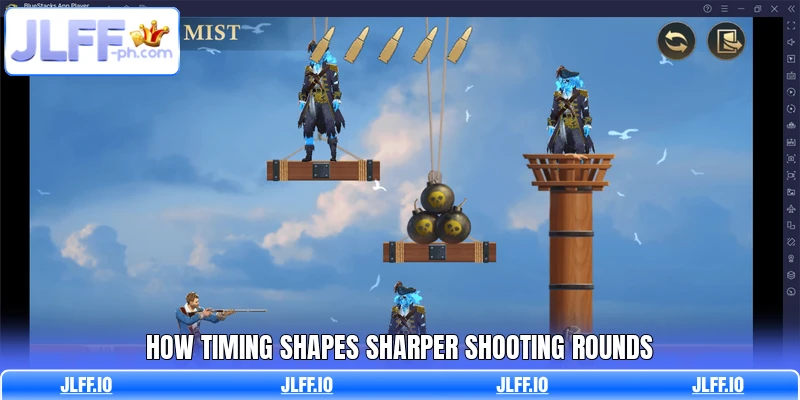
Target behavior changes the way each round feels without making the rules feel scattered. Good aim depends on reading motion, pause length plus scoring risk before release.
Easy static bullseye aiming
Static bullseyes give the clearest starting point because the center stays fixed through the shot window. The main task is not speed alone since the pointer must settle before release. This target type helps form the base rhythm used later when pressure becomes less predictable during advanced rounds with tighter scoring demands.
A calm approach to Sharpshooter King starts with these steady bullseyes because they reveal aim quality fast. Misses usually come from rushed release rather than confusing movement on the screen or unclear target behavior. Once the hand learns to pause briefly, the same discipline can carry into faster target patterns with steadier control.
Score building with static targets depends on repeatable control over flashy action. The best moments come from lining up the center then holding just long enough before firing without dragging the pointer away. That habit keeps the round stable while leaving enough time for the next shot in sequence during longer careful play.
View more: Rapid Fire – Fast Action Guide For Sharper Arcade Play
Hidden targets testing speed
Hidden targets create pressure by appearing for short windows before leaving the screen. The player must react quickly yet careless movement can still damage accuracy during a scoring window. This format suits rounds where the mind has to recognize position fast without abandoning the basic rules of controlled aim under time pressure.
In Sharpshooter King, hidden targets reward preparation before the target fully appears. Keeping the pointer near likely zones can shorten reaction time without turning play into random guessing during tight rounds. The key is to move with purpose then stop cleanly before firing before the window closes with steady shooting form safely.
These targets can punish panic because the visible moment feels brief. A rushed shot may land outside the scoring zone even when the target was spotted early. Better results come from treating each appearance as a short puzzle with a start point, a pause then release under controlled timing in each round.
Sharpshooter King moving targets by path
Moving targets shift the challenge from still alignment to path reading across the field. The center is reachable only when the pointer meets the target at the right moment. A player must judge direction first then guide the aim toward a future position rather than the current one with patient control first.
Straight paths feel easier because movement can be predicted after a quick glance. Curved routes demand more patience since the target may change height or angle before the shot lands. Releasing during a stable crossing point usually gives a better result than chasing the target until time fades away near the end.
Strong rounds come from watching patterns instead of reacting to every small movement. The pointer should travel less than the eye because overcorrection often causes late misses. Once the path becomes familiar, the shot can be prepared before the center reaches the most useful point in the visible route during play confidently.
Special multiplier crosshair
Multiplier targets add extra tension because one accurate hit can raise the value of a round. The scoring effect makes timing feel heavier yet the shot still needs the same clean setup as ordinary targets. Chasing the bonus without alignment often turns a strong round into a weak finish too quickly today.
During Sharpshooter King, this target type should be treated as a calculated choice rather than a desperate swing. A player can wait for a readable angle or skip when the clock becomes too tight. That restraint protects the score from risky decisions while keeping the round under control for longer careful play.
The special crosshair works best when earlier shots have created a stable pace. Confidence from simple targets helps the player judge whether the multiplier is worth the attempt. When the setup feels forced, ordinary scoring may be the smarter path because control matters more than a dramatic hit late in pressure moments.
View more Category: Arcade
Conclusion
Sharpshooter King works best when aim timing plus target reading stay balanced across each round. The game feels clear because every target type asks for a different kind of control without drifting from the shooting core. JLFF can be a fitting place to create an account with calm focus, good luck there.